

In the agricultural value chain, the trade of grains and food holds a central position, forming a critical part of the global food supply chain and affecting economic stability across countries.
International food trade enhances resource allocation for agricultural production, meeting the dietary needs of a growing global population. Efficient agricultural trade ensures food security and generates income. It acts as a buffer against domestic agricultural shocks, allowing countries to rely on imports when domestic production falls unexpectedly due to adverse weather or natural disasters. However, not all countries can equally benefit from international food trade.
Globalization and the Complexity of the Global Grain Trade Network
Post-COVID developments show that increasing globalization has added complexity to the global grain and food trade network. Globalization has driven more economies to participate in international agricultural trade, emphasizing the importance of grain trade beyond mere commodity exchange. Grains like wheat, corn, rice, and soybeans are vital, providing essential nutrients to billions. Their trade patterns reflect complex interactions between national agricultural policies, global market dynamics, and environmental factors.
According to FAO data, wheat and corn constitute a significant portion of global grain trade. In 2020, international wheat trade reached about 184 million tons, while corn trade was around 163 million tons, highlighting their vast global movement. Major importers like Egypt, Indonesia, and Algeria for wheat, and Japan, Mexico, and South Korea for corn, showcase the geographical dependence on these grains. Furthermore, countries in the Arab world and the Middle East import large quantities of wheat and corn through virtual water trade, crucial for regional food security and water resource management.
China’s strategic investments in soy, wheat, and corn trade underscore the critical role of these grains in meeting its growing food demand and ensuring national food security. This global dependency on grain trade impacts food security policies, international trade agreements, and national economic strategies.
Market Value of Agricultural Trade
In the past decade, agricultural trade has constituted 7-10% of global goods trade. Since the WTO’s establishment, regional trade agreements have surged, supported by AI to integrate and harmonize multiple trade regulations, reducing costs. Globalized food systems highlight that corporations, not countries, primarily drive agricultural trade, and supply shocks can affect distant nations.
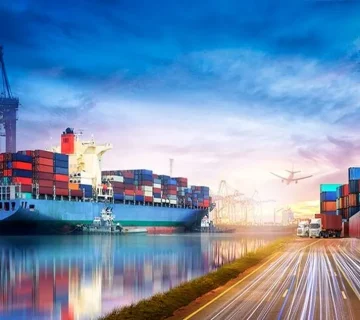
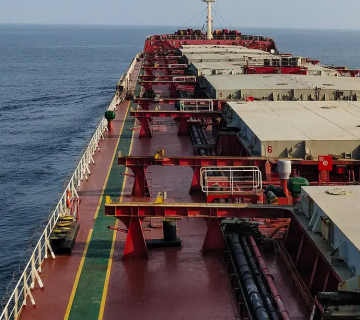
Maritime transport dominates agricultural trade, with about 80% of global trade by sea, increasingly in containerized formats. The value of global agricultural trade has grown significantly, driven by income and population growth, productivity improvements, and policy changes like tariff reductions and preferential trade agreements.
However, recent growth in agricultural trade remains modest, forming about a tenth of global goods trade. High trade costs, especially for less developed countries, are a significant barrier. Historically, trade policies with high tariffs and non-tariff barriers like quarantine measures and sanitary standards have impeded agricultural trade. The perishable and bulky nature of agricultural products also adds to transport costs.
The Container Revolution in Food Transshipment
Since the 1970s, containerized shipping has grown rapidly, benefiting agricultural trade. US and EU data show that maritime trade comprises 80% of the volume and 70% of the value of agricultural products. While some products like fruits and grains are traditionally shipped in bulk, containerization is increasing. For example, 25% of fruits and vegetables are transported in containers.
The rise in US exports of perishable agricultural products is linked to refrigerated containers, which dominate the cold chain market with an 80% share. In 2018, vegetables and fruits were significant in global container trade, comprising 4.8% of its volume. EU and US trends indicate a growing rate of containerization in agricultural trade.
From 2010 to 2020, over 20% of EU agricultural imports by sea were containerized, with 44% of exports following suit. Soy, grains, and bulk grains, with lower containerization levels, are major EU imports, while perishable and non-perishable foods, beverages, and cork are key exports with 72% containerization. For the US, over 73% of agricultural imports and 24% of exports by sea were containerized. Soy and grains, key US exports, have low containerization rates, whereas imports like bananas, other fruits, and beverages show high containerization.
In February 2024, the EU’s agricultural trade surplus reached €6.2 billion, with significant exports of olive oil and a slight decline in imports. The EU remains the largest exporter of agricultural and food products, benefiting from extensive transshipment and container trade networks.
Conclusion
Research shows expanding trade networks with increasingly concentrated trade relations. Despite significant progress in the past 30 years, food insecurity still affects around two billion people, with malnutrition rising since 2014. Factors like conflicts, logistic disruptions, geopolitical shocks, and climate variability contribute to this trend.
As about a quarter of agricultural production crosses international borders, trade plays a key role in food security and in transmitting shocks. While international markets offer benefits like decoupling food consumption from local production, they can also amplify vulnerabilities to external disruptions.
Food trade, especially in sensitive agricultural commodities, often intersects with national food sovereignty policies. Among 47 low-income food-deficit countries, 18 are landlocked, heavily relying on neighboring coastal nations for food imports, which can impose forms of food hegemony through strategic planning.

No comment